상위: Spark
요약
RDD Transformation은 기존 RDD를 새로운 RDD로 변환하는 연산입니다. map, filter, flatMap 등의 기본 연산부터 groupBy, join 등의 집계 연산까지 다양하며, Lazy Evaluation 방식으로 동작합니다.
MAP
각 요소에 함수를 적용하여 1:1 변환
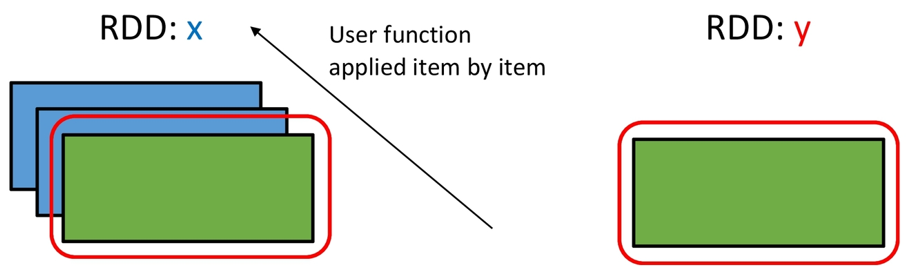
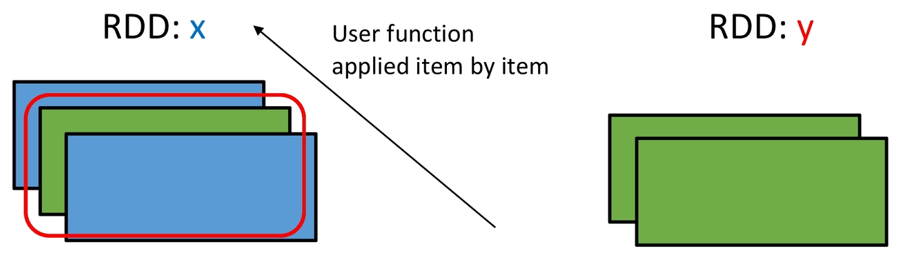
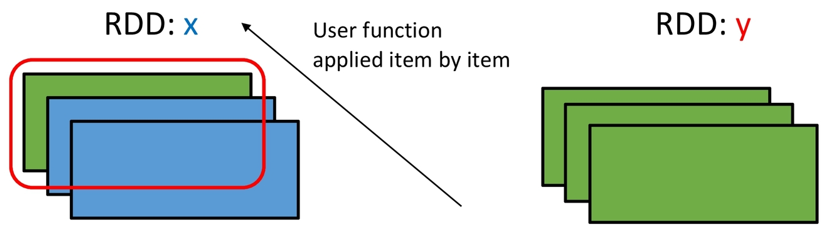
x = sc.parallelize(['b', 'a', 'c'])
y = x.map(lambda z: (z, 1))
print(x.collect())
print(y.collect())
출력:
x: ['b', 'a', 'c']
y: [('b', 1), ('a', 1), ('c', 1)]
FLATMAP
각 요소를 여러 요소로 확장 (1:N 변환)
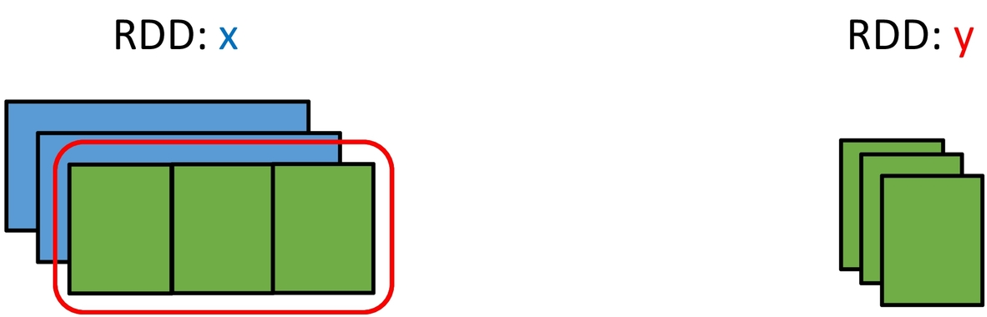
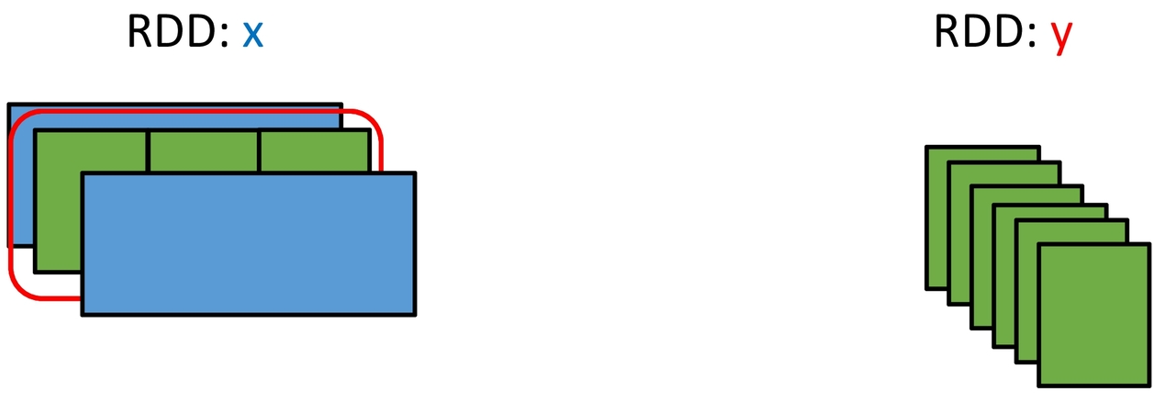
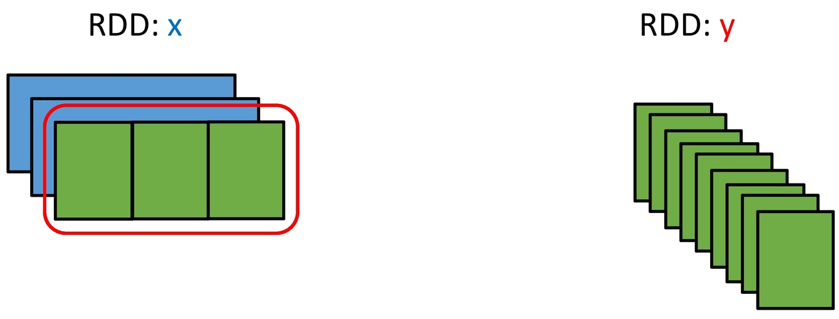
x = sc.parallelize([1, 2, 3])
y = x.flatMap(lambda x: (1*x, 2*x, 3*x, 100))
print(x.collect())
print(y.collect())
print(y.mean())
출력:
x: [1, 2, 3]
y: [1, 2, 3, 100, 2, 4, 6, 100, 3, 6, 9, 100]
y.mean(): 28.0
FILTER
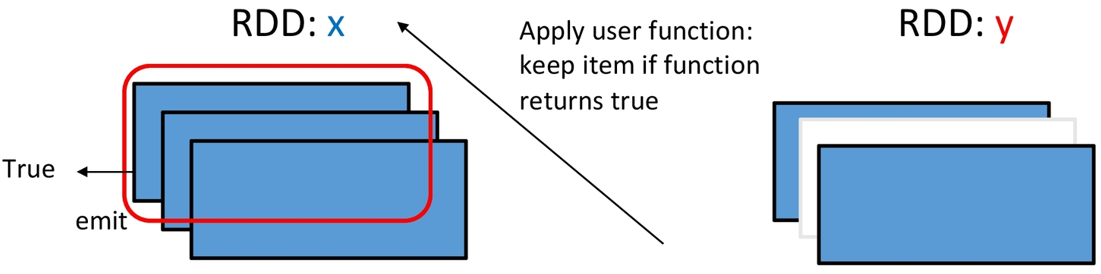
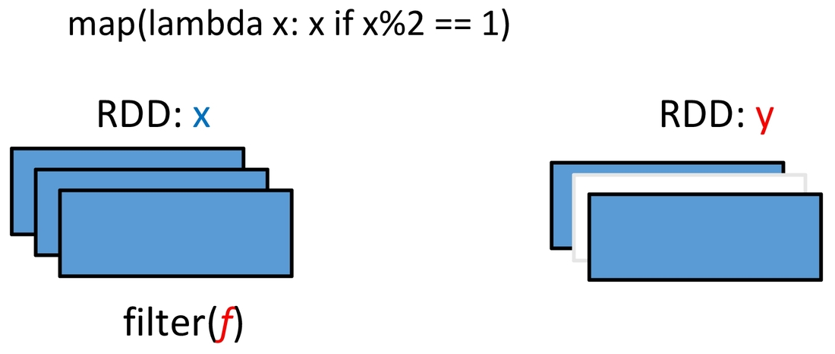
조건을 만족하는 요소만 필터링
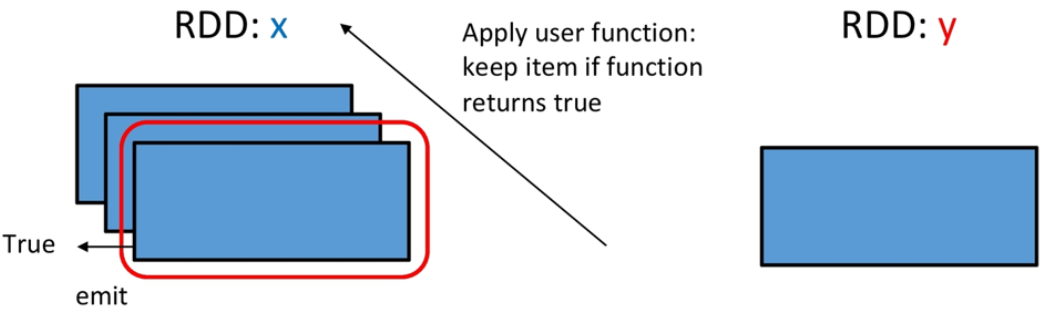
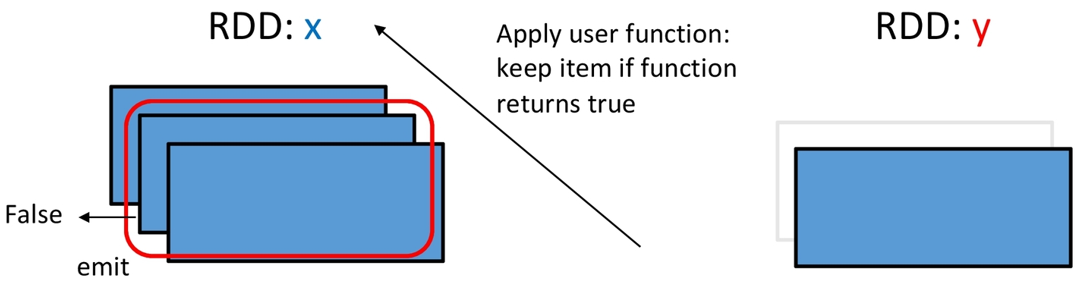
x = sc.parallelize([1, 2, 3])
y = x.filter(lambda x: x % 2 == 1)  # 홀수만 필터링
print(x.collect())
print(y.collect())
출력:
x: [1, 2, 3]
y: [1, 3]
MAPPARTITIONS
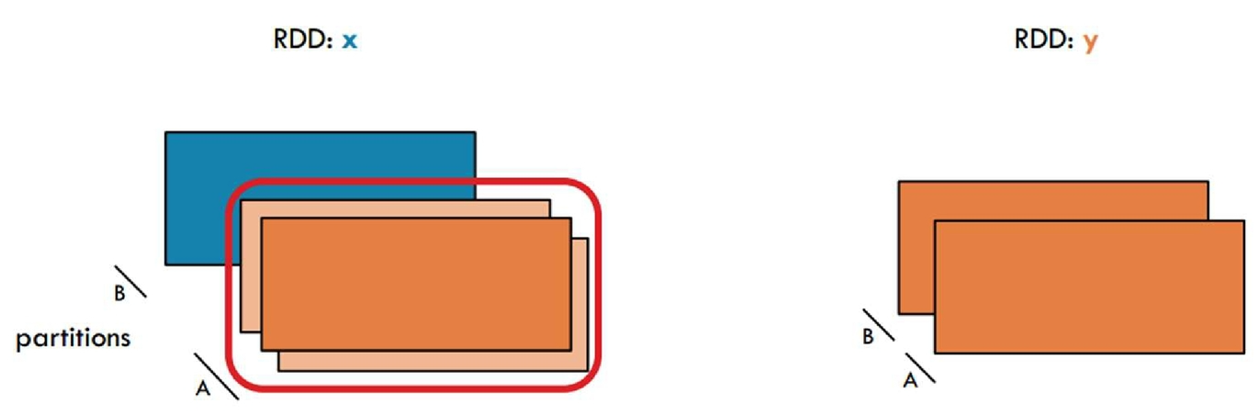
파티션 단위로 함수를 적용
x = sc.parallelize([1, 2, 3], 2)

def f(iterator):
    yield sum(iterator)
    yield 42

y = x.mapPartitions(f)

print(x.glom().collect())  # 각 파티션의 원소 확인
print(y.glom().collect())  # 파티션별 결과
출력:
x: [[1], [2, 3]]
y: [[1, 42], [5, 42]]
MAPPARTITIONS WITH INDEX
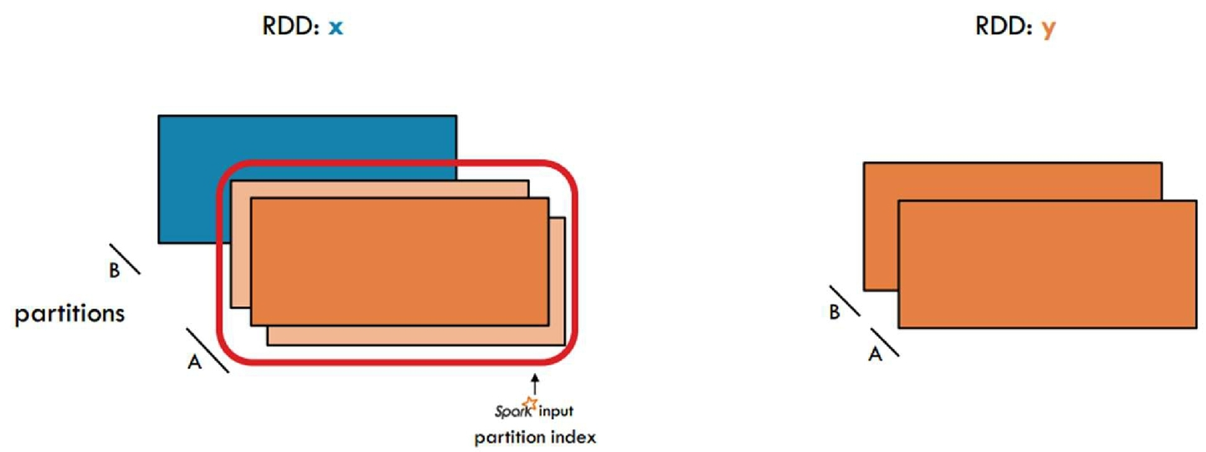
파티션 인덱스와 함께 처리
x = sc.parallelize([1, 2, 3], 2)

def f(partitionIndex, iterator):
    yield (partitionIndex, sum(iterator))

y = x.mapPartitionsWithIndex(f)

print(x.glom().collect())
print(y.glom().collect())
출력:
x: [[1], [2, 3]]
y: [[(0, 1)], [(1, 5)]]
KEYBY
각 요소에서 키를 추출하여 (key, value) 형태로 변환
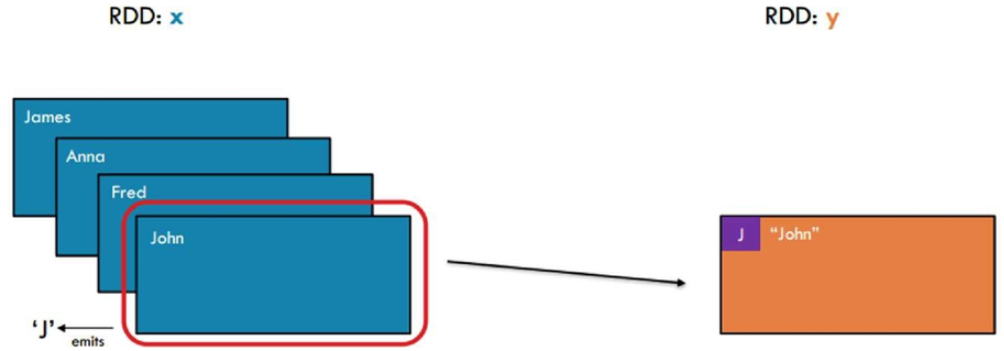
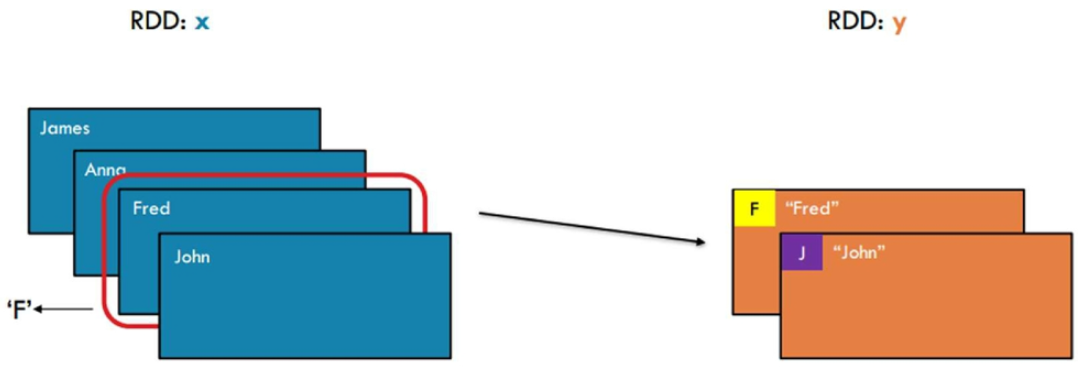
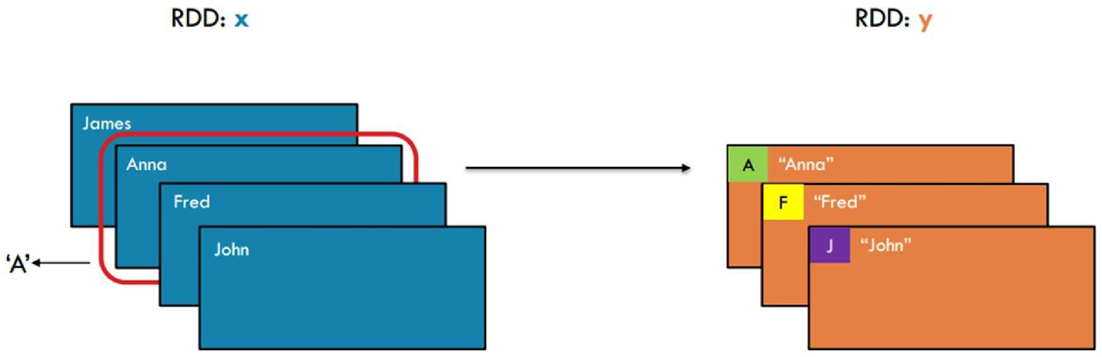
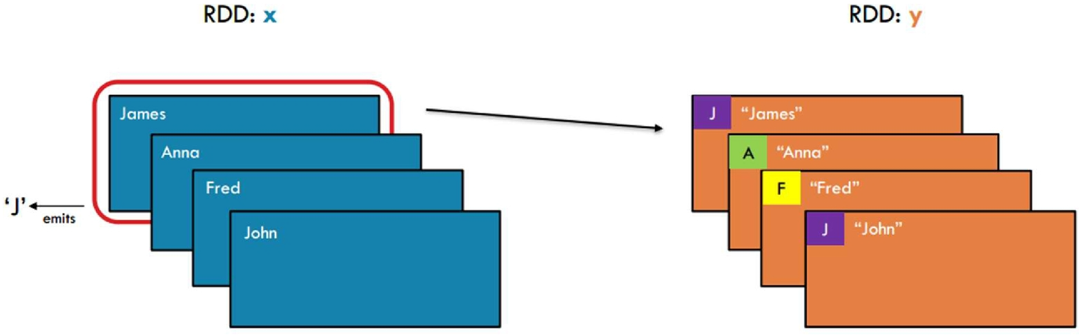
x = sc.parallelize(['John', 'Fred', 'Anna', 'James'])

y = x.keyBy(lambda w: w[0])

print(y.collect())
출력:
x: ['John', 'Fred', 'Anna', 'James']
y: [('J', 'John'), ('F', 'Fred'), ('A', 'Anna'), ('J', 'James')]
GROUPBY
키를 기준으로 그룹화
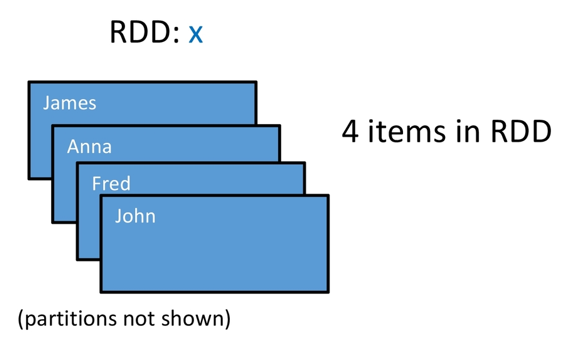
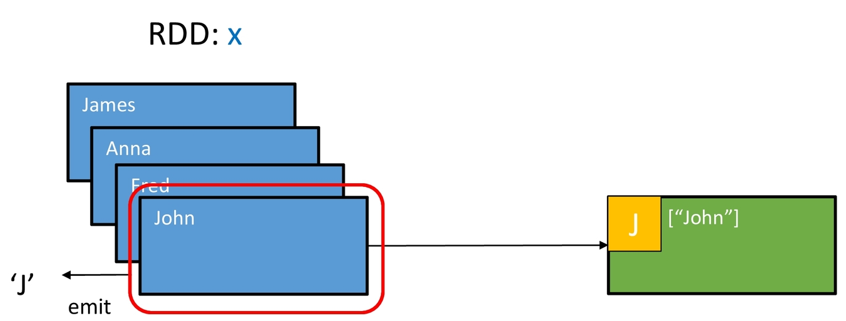
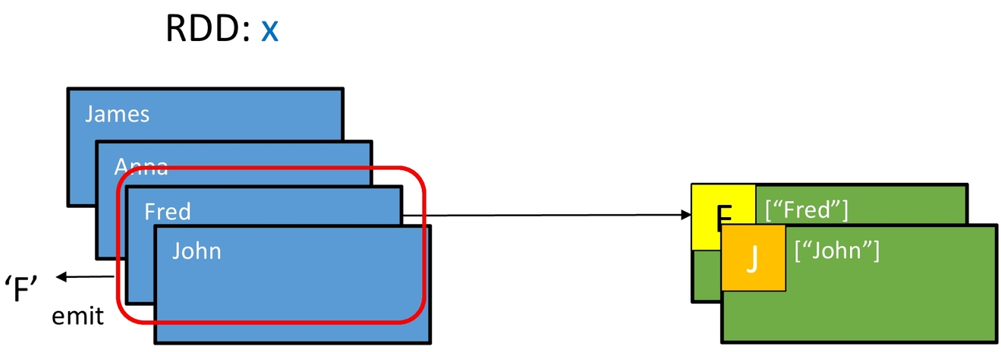
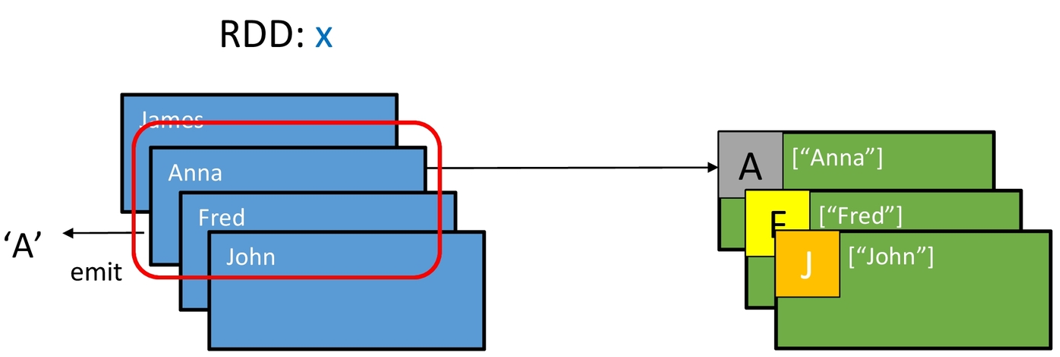
x = sc.parallelize(['John', 'Fred', 'Anna', 'James'])

y = x.groupBy(lambda w: w[0])
print([{t[0]: [i for i in t[1]]} for t in y.collect()])
출력:
x: ['John', 'Fred', 'Anna', 'James']
y: [{'A': ['Anna']}, {'J': ['John', 'James']}, {'F': ['Fred']}]
GROUPBYKEY
(key, value) RDD를 키로 그룹화
x = sc.parallelize([('B', 5), ('B', 4), ('A', 3), ('A', 2), ('A', 1)])

y = x.groupByKey()
print(x.collect())
print([(t[0], [i for i in t[1]]) for t in y.collect()])
출력:
x: [('B', 5), ('B', 4), ('A', 3), ('A', 2), ('A', 1)]
y: [('B', [5, 4]), ('A', [3, 2, 1])]
Word Count using GROUPBYKEY
words = sc.parallelize(['one', 'two', 'two', 'three', 'three', 'three'])
wordPairsRdd = words.map(lambda w: (w, 1))
wordCounts = wordPairsRdd.groupByKey().map(lambda pair: (pair[0], sum(pair[1])))

print(words.collect())
print(wordPairsRdd.collect())
print(wordCounts.collect())
출력:
words: ['one', 'two', 'two', 'three', 'three', 'three']
wordPairsRDD: [('one', 1), ('two', 1), ('two', 1), ('three', 1), ('three', 1), ('three', 1)]
wordCounts: [('one', 1), ('two', 2), ('three', 3)]
REDUCEBYKEY
Grouping + Aggregation을 한 번에 수행
words = sc.parallelize(['one', 'two', 'two', 'three', 'three', 'three'])
wordPairsRdd = words.map(lambda w: (w, 1))
wordCounts = wordPairsRdd.reduceByKey(lambda cnt1, cnt2: cnt1 + cnt2)

print(words.collect())
print(wordPairsRdd.collect())
print(wordCounts.collect())
출력:
words: ['one', 'two', 'two', 'three', 'three', 'three']
wordPairsRDD: [('one', 1), ('two', 1), ('two', 1), ('three', 1), ('three', 1), ('three', 1)]
wordCounts: [('one', 1), ('two', 2), ('three', 3)]
REDUCEBYKEY vs GROUPBYKEY
- 두 함수가 모두 사용 가능하다면, ReduceByKey 사용 권장
- ReduceByKey는 셔플 전에 행을 결합하여 셔플해야 할 행의 수를 줄일 수 있음
- 로컬 집계 수행
- 중간 결과의 크기를 줄일 수 있음
REDUCEBYKEY: 집계하고 Shuffle → 효율적
GROUPBYKEY: Shuffle하고 집계 → 비효율적

JOIN
두 RDD를 키 기준으로 조인
x = sc.parallelize([("a", 1), ("b", 2)])
y = sc.parallelize([("a", 3), ("a", 4), ("b", 5)])

z = x.join(y)
print(z.collect())
출력:
x: [("a", 1), ("b", 2)]
y: [("a", 3), ("a", 4), ("b", 5)]
z: [("a", (1, 3)), ("a", (1, 4)), ("b", (2, 5))]
UNION
두 RDD를 합침 (중복 제거 안 함)
x = sc.parallelize([1, 2, 3], 2)
y = sc.parallelize([3, 4], 1)
z = x.union(y)

print(z.glom().collect())
출력:
x: [[1], [2, 3]]
y: [3, 4]
z: [[1], [2, 3], [3, 4]]
DISTINCT
중복을 제거 (Shuffle 발생)
x = sc.parallelize([1, 2, 3, 3, 4])
y = x.distinct()

print(y.collect())
출력:
x: [1, 2, 3, 3, 4]
y: [1, 2, 3, 4]
SAMPLE
데이터를 샘플링
형식: sample(withReplacement, fraction, seed=None)
x = sc.parallelize([1, 2, 3, 4, 5])
y = x.sample(False, 0.4, 42)

print(x.collect())
print(y.collect())
출력:
x: [1, 2, 3, 4, 5]
y: [1, 3]
COALESCE
파티션 수를 줄임 (Shuffle 없이)
x = sc.parallelize([1, 2, 3, 4, 5], 3)
y = x.coalesce(2)

print(x.glom().collect())
print(y.glom().collect())
출력:
x: [[1], [2, 3], [4, 5]]
y: [[1], [2, 3, 4, 5]]
COALESCE vs REPARTITION
- COALESCE: 파티션 줄이기 (merge), Shuffle 없음
- REPARTITION: 파티션 늘리기 or 균등 재분배, Shuffle 발생
PARTITIONBY
커스텀 파티셔너로 재분배
x = sc.parallelize([('J', 'James'), ('F', 'Fred'), ('A', 'Anna'), ('J', 'James')], 3)
y = x.partitionBy(2, lambda w: 0 if w[0] < 'H' else 1)

print(x.glom().collect())
print(y.glom().collect())
출력:
x: [[('J', 'James')], [('F', 'Fred'), ('A', 'Anna')], [('J', 'James')]]
y: [[('A', 'Anna'), ('F', 'Fred')], [('J', 'James'), ('J', 'James')]]